Job 1

Job's Bereavement

Sheep

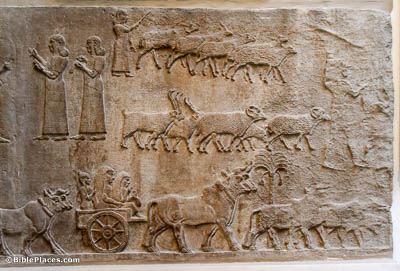
(Job’s) possessions included 7,000 sheep, 3,000 camels, 500 yoke of oxen, 500 female donkeys (Job 1:3).

The book of Job introduces the titular character as vastly wealthy, reflected in the size of his flocks and herds. In ancient times, sheep were valued for their wool, milk, and meat. This relief, carved on the walls of Tiglath-pileser III’s palace at Nimrud and photographed at the British Museum, depicts two Assyrian scribes taking a tally as groups of captured livestock are driven past. Prior to the severe tragedy inflicted later in this chapter, Job would have been quite familiar with a similar scene.
Feasting

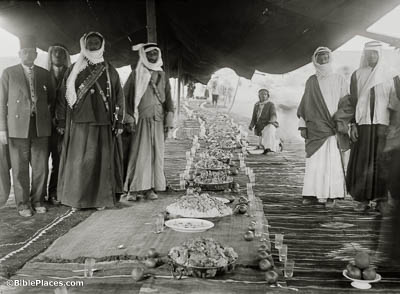
His sons used to hold a feast in the house of each one by turn, and . . . invite their three sisters (Job 1:4)

The blessed state of Job’s children is revealed prior to their deaths, as they gathered regularly to share a lavish feast together. This photo shows preparations for a very large meal, served as part of the Pan-Islamic conference at Shunat Nimrin, Transjordan. The meal is spread on oriental rugs under a long Bedouin tent. This American Colony photograph was taken on December 12, 1931.

Torn Robe

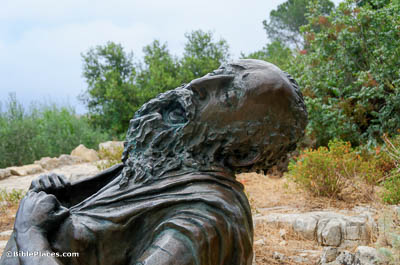
Then Job got up and tore his robe (Job 1:20).

The tearing of a robe is a familiar scene in biblical literature to reflect anguish and distress. Job never cursed the Lord, but he was emotionally distraught, as revealed by his actions. This sculpture depicts a weeping prophet, and it is on display in the Biblical Gardens at Yad HaShmonah in the Judean hills.

Shaving

Then Job got up and tore his robe and shaved his head (Job 1:20).

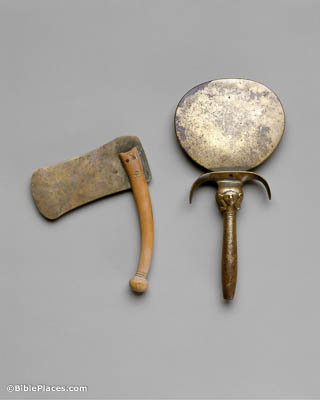
If in his grief Job shaved his own head, he may have used a tool kit similar to the one shown here. This set of a razor with handle and a bronze polished mirror comes from the Tomb of Hatnefer and Ramose at Sheikh Abd el-Qurna, Thebes. This image comes from the Metropolitan Museum of Art and is in the public domain (Rogers Fund, 1936, accession number 36.3.69,.13-related).

Piety

Through all these things Job did not sin or blame God (Job 1:22).

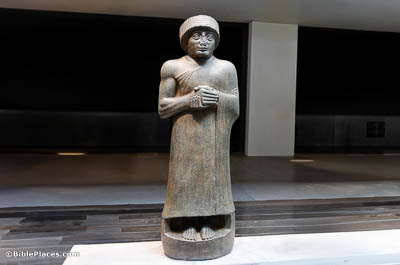
Not surprisingly, no ancient depictions of Job exist. But other contemporary cultures do preserve art of revered individuals. This diorite statue depicts Gudea, prince of Lagash, as a pious man. His clasped hands, like those of other similar statues of this period, are intended to express that he is a devoted and blameless worshiper. This statue was photographed at the Louvre Abu Dhabi. Generative AI has been used to extend the edges of this image.

Purchase the Collection:

Job (Photo Companion to the Bible)

FREE Shipping plus Immediate Download