Job 6

Job Laments

Scales

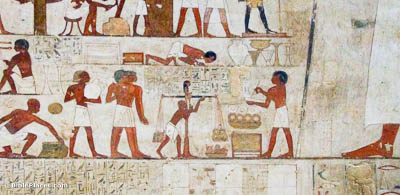
How I wish that my grief were weighed, placed in the balance with my calamity! (Job 6:2)

In response to Eliphaz, Job compares his grief to heavy weights, desirous for his friends to understand the awful suffering he was enduring. This tomb painting depicts men weighing out rings of gold on a balance scale. In this case, the rings are weighed on the right, and the weights (shaped like various animals) are in the pan on the left. This painting dates to Egypt’s Dynasty 18 and was photographed in the tomb of Rekhmire at Thebes.
Arrows

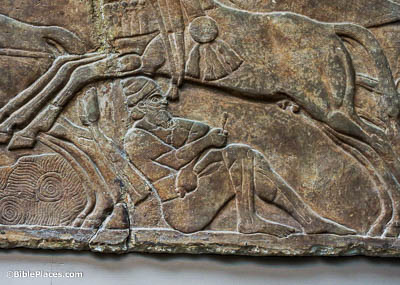
For I have been pierced by the arrows of the Almighty (Job 6:4).

Job held fast to the sovereignty of God, believing that his affliction ultimately came from the Lord. For this reason, the bulk of Job’s speeches are addressed to God. This Assyrian relief shows an enemy soldier who has been pierced by arrows. He sits on the ground and holds the end of an arrow shaft in each hand, presumably desiring to pull them out. This relief dates to the reign of Ashurnasirpal II (883–859 BC) and was discovered at Nimrud. It was photographed at the British Museum.

Wild Donkey

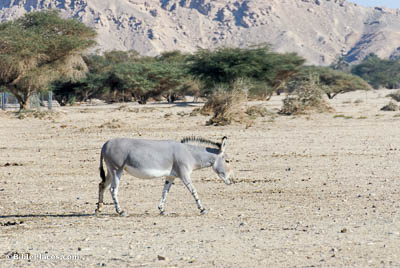
Does the wild donkey bray when he has grass? (Job 6:5)

The answer to this set of rhetorical questions in verses 5 and 6 is “no.” Animals are generally quiet when they have plenty to eat and drink. The implication is that Job’s own complaint comes from the crisis he is facing, having lost his family, fortune, and health. This wild donkey was photographed at Haibar Nature Reserve, located in the southern Arabah Valley.

As Strong as Bronze

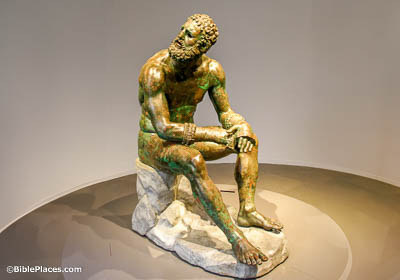
Is my strength like that of stone, or is my flesh as strong as bronze? (Job 6:12)

In contrast to the heavenly Lord, Job felt his humanity very keenly, and his questions were intended to elicit a response of compassionate relief from the Lord. This bronze statue portrays a strong, well-muscled man in the prime of life. Portrayed as a boxer, he is stripped for competition but wears boxing gloves on his hands. This statue comes from the Via IV Novembre on the Quirinal slopes in Rome. It was photographed at the National Museum of Rome.

Overflowing Wadi

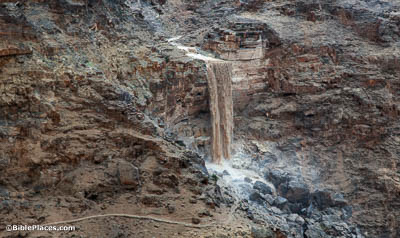
But my brothers have been like a treacherous wadi, like streams that overflow. They run dark with ice, they are swollen with melting snow (Job 6:15-16).

In most regions of Israel, water quickly runs off and disappears. This is particularly true in the Judean wilderness, which sees occasional rainfall that produces streams, but those streams quickly disappear. This waterfall was photographed during a flash flood in Wadi Qilt. Most days of the year, this wadi is completely dry. Generative AI was used to extend the left and right sides of this image.

Purchase the Collection:

Job (Photo Companion to the Bible)

FREE Shipping plus Immediate Download