Job 28

The Search for Wisdom

Metallurgy

Surely there is a place where silver is mined, and another where they refine gold (Job 28:1).

The brilliant poem of Job 28 begins by marveling about man’s ingenuity and skill in extracting precious metals from the earth. Man has located the sources of treasures like silver and gold as well as practical metals like iron and copper. These resources are hard to find, buried in deep darkness far below the earth’s surface. By traveling into remote areas and sinking shafts into the ground, man has discovered treasures of tremendous value.

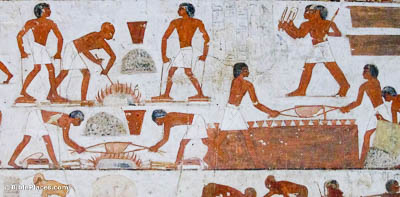
This relief shows various steps in the process of refining ore to metal in an Egyptian workshop. There are two sets of men at the left who are working the bellows for furnaces, using foot-powered pumps. On the right they are pouring molten metal into molds. This wall painting is located in the tomb of Rekhmire, the “Governor of the Town” at Thebes (modern Luxor).
Iron Mine

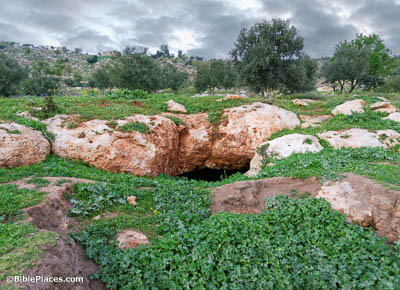
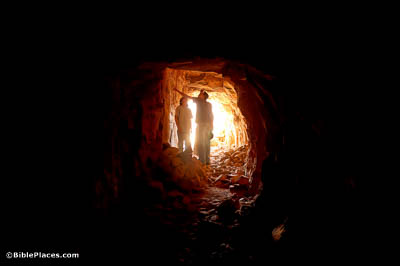
Iron is taken from the dust (Job 28:2).

To bring these precious minerals out of the rock, man had to devise means of extracting them, beginning with the dangerous work of tunneling underground and dangling on ropes in vertical shafts. He had to illuminate the blackest darkness to travel to the base of the mountains. He attacked the flinty rock, even using explosions (“fire”) to break it loose. This ancient iron mine is located at Mugharet el-Wardeh in central Jordan. An iron smelting site was discovered at nearby Tell Hammeh, dated to about the 10th century BC, the time of David and Solomon.

Wadi Maghara

He searches out the rock in gloom and deep shadow (Job 28:3).

As great as man’s ability to discover hidden treasure is, he has utterly failed to locate the subterranean vein where wisdom is buried. No mine shaft has ever been sunk to bring understanding out of the earth. It cannot be located in the skies above, nor is it to be found in the depths of the sea. Wadi Maghara is located in the southwestern Sinai Peninsula. It was exploited by the Egyptians for turquoise as early as the 3rd dynasty (ca. 2700 BC).

Falcon

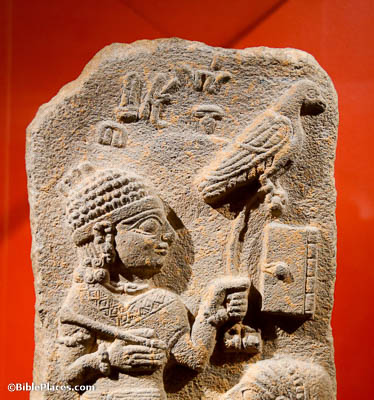
No bird of prey knows the path, nor has the falcon’s eye seen it (Job 28:7).

Of all of creation, only man can discover these treasures and bring them to light. Only the mind of man is capable of applying such technological sophistication to accomplish such wonderful results. Even the falcon, with its far-ranging gaze over the earth, or the lion, the greatest of all the beasts, can do nothing which compares with man’s ingenious skills. Man is truly majestic in his mastery over the earth. This basalt stele (8th century BC) from Marash portrays a man with a hunting falcon. It was photographed at a special Louvre exhibit at the National Museum of Iran in Tehran.

Lapis Lazuli

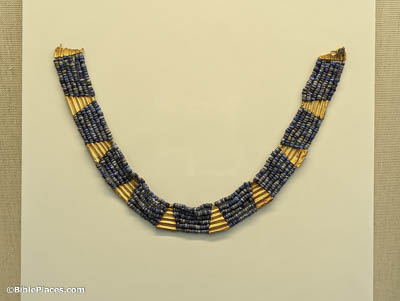
(Wisdom) cannot be valued with the gold of Ophir, or with amethyst or lapis lazuli (Job 28:16).

Nor can man purchase wisdom. Though he empty his wallet and drain his bank account, his wealth is insufficient to equal the vast value of wisdom. Even if man brings the purest gold, the most precious onyx, or the most brilliant crystal, he will never conclude a purchase. Lapis lazuli was transported along trade routes all over the ancient Near East and was as popular in Mesopotamia as it was in Egypt. This necklace consists of lapis lazuli beads and gold triangles. It was photographed at the Bible Lands Museum in Jerusalem.

Purchase the Collection:

Job (Photo Companion to the Bible)

FREE Shipping plus Immediate Download